Thursday, May 8, 2014

Carving up the world

We have now been in Italy for just over a month, having moved here for my husband to take up a research position for one year. I have slowly been picking up some Italian (hoping to pick up more, more quickly!) as I go to the local market most days and interact with the market stall holders. The market stall holders know me now and try to help me learn new words. The other day it was interesting to learn from the butcher that the word for 'thick' in Italian is the same as the word for 'tall' (alta/o). I think it's also the word for 'deep’.


It's interesting because the concepts of height and thickness are differentiated in English but not in Italian. That aspect of our experience of space is divided up differently in the two languages. This is a concept I was trying to teach my students recently - the concept of linguistic relativity and how different languages make sense of experience in different ways.

In English we want to make a distinction between the concept of height (how far something stands vertically above the ground, as with a person or a building), thickness (similar to tall-ness but it doesn't have to be vertical; perhaps better described as how far between the two opposing edges of something, as with a sponge or a coat), and depth (how far something extends down towards its lowest point, as with the ocean or a baking tin). You can see how they are all quite similar concepts. But there is a subtlety that we can discern if we think about why we use three different words to refer to them rather than one.

So now I know to ask for 'taller/deeper/thicker' pork chops rather than 'bigger' ones.


Monday, March 3, 2014

A picture's worth a thousand words?

Recently I saw the film 'The Book Thief', based on the book by Australian author Markus Zusak. Perhaps you saw it too. I enjoyed it despite the grim moments, and especially loved the wonderful characters and warm, quirky humour. But I had read the book, and there was something missing - as there often is when the book becomes a film.


When I read the book, I was struck by the many fascinating turns of phrase, the way words seemed to have been carefully chosen to stop you in your tracks as you were reading so that you would pay attention to the description and let it sit with you.

Here's an extract from the first chapter:

Of course, an introduction.
            A beginning.
Where are my manners?
I could introduce myself properly, but it’s not really necessary. You will know me well enough and soon enough, depending on a diverse range of variables. It suffices to say that at some point in time, I will be standing over you, as genially as possible. Your soul will be in my arms. A color will be perched on my shoulder. I will carry you gently away.
At that moment, you will be lying there (I rarely find people standing up). You will be caked in your own body. There might be a discovery; a scream will dribble down the air. The only sound I’ll hear after that will be my own breathing, and the sound of the smell, of my footsteps. (p.4)

The sections in bold are what I'm talking about - words put together (the technical terms is 'collocations') that are quite unusual, often because the verb typically calls for a particular kind of noun to be the 'do-er' or the 'done-to', but the noun chosen is of a different kind that would not normally be considered a good fit. It's not enough just to put a noun with a verb - under normal circumstances, you have to choose the right kind of noun with particular semantic properties in order for it to work well with the verb. But in literature, the writer can exploit and subvert these conventions in order to make very particular or vivid meanings.

'A color [excuse the American spelling] will be perched on my shoulder.' 'To perch' is a particular kind of verb that generally calls for a very tangible thing to do the perching - for example, a bird is the thing you would usually expect to find perched on someone's shoulder. Sometimes a building is said to be perched on a cliff top or other precarious position. But a 'colour' - that is certainly not a tangible thing. Colour is an abstract quality. So we can differentiate between two categories of nouns - concrete and abstract. Some verbs need a concrete noun, whereas others can take either abstract or concrete.

I'm still not sure what it means for the narrator (spoiler alert: the narrator is 'Death') to say that a colour will be perched on his shoulder. Perhaps Zusak means for us to be confused there - after all, we can't yet know what it will be like when we die. Or perhaps he's trying to make 'colour' more tangible here by its association with the verb 'to perch'.

A similar thing is happening with 'a scream will dribble down the air'. With the verb 'to dribble', we expect the thing that dribbles to be concrete, and more specifically, something liquidy. You can see now how specific the requirements of the verb can be in terms of what kinds of nouns are 'allowed' to hang around with it. But 'a scream'? - it's neither liquid nor concrete.

Likewise, the phrase 'down the air' subverts our expectations. We expect that if something dribbles, it will dribble down a tangible surface, such as a wall or window. But 'the air' is not a surface and so the whole clause jars you as you read. As I ponder it, I get a very vivid image of the way the sound of the scream might make an initial impact and then gradually die away, leaving some kind of mental or emotional trace, as liquid dribbling down a surface leaves a trace.

I expect it would be very difficult, no matter how good the screenplay, to capture in film the meanings made by these unusual collocations. There are lots of these examples in the book where abstract things are collocated with verbs that usually require concrete things, and the thing about abstract things is that they are abstract. That is, they are harder to convey in the visual medium of film, without using the original wording somehow in spoken or written language as part of the film. A picture may be worth a thousand words; but where the words precede the picture, there may be no picture worthy of the words.  

References

Zusak, M. (2008) The Book Thief. Sydney: Picador/Pan Macmillan.

Sunday, December 1, 2013

These are a few of my favourite things


My friend Jenny who lives in England has been sick with ME for 9 years. She recently posted a list of her favourite things on her blog and asked her friends to do the same on December 1st to bring a smile to her face on a dark day (9 years since she first became ill).

These are a few of my favourite things (in no particular order):
  • food of most kinds, especially coffee & cake/pastries, hearty Italian food, deliciously flavoursome Thai or Indian food, icecream or gelato, fresh sweet pineapple, juicy peaches, champagne
  • singing harmonies
  • reading the Bible with someone and learning together from it
  • exploring new places when travelling 
  • the beach (rockpools, reading on the beach, walking on the beach at low tide, swimming when the surf is gentle)
  • summer evenings spent outside with friends and a summery drink
  • observing language patterns and playing language games
  • getting packages and handwritten letters in the mail
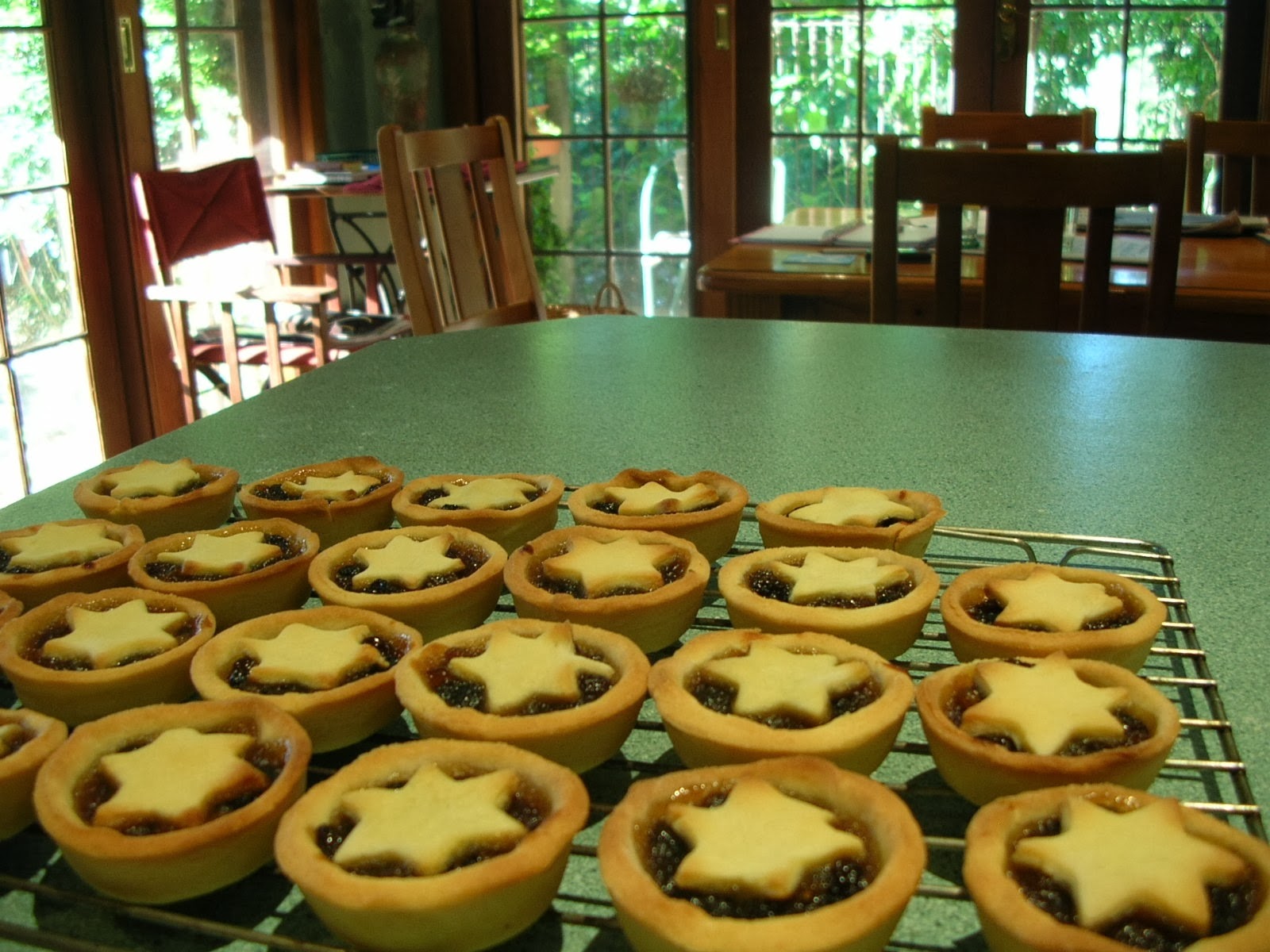
  • listening to singable music while baking - especially at Christmas time, baking mince pies or shortbread while listening to and singing along with classic Christmas carols (A Carnegie Hall Christmas has been my favourite for a long time)

Saturday, August 17, 2013

Where can I go from here?

In the latest round of campaigning for the federal election, opposition leader Tony Abbott has announced that he wants to reduce the number of boats of asylum seekers coming to Australia to a maximum of three boats per year (see article). Apparently there were only 3 boats a year during the last years of John Howard's government (1996-2007), and that's his model.

The proposal is to stop offering residency to people who are recognised as refugees. He reckons he can get it down to that level within the first term of government if his party wins the election this September. That's three years.

But wait, what's a refugee? According to the United Nations Convention Relating to the Status of Refugees (1951 - which Australia is a signatory of), a refugee is: “Any person who owing to a well founded fear of being persecuted for reasons of race, religion, nationality, membership of a particular social group or political opinion, is outside the country of his/her nationality and is unable, or owing to such fear, is unwilling to avail himself/herself of the protection of that country.” (see here for more information).


It seems to me that in all the media hype and politicising of "the boats", we have lost sight of the fact that there are human beings on the boats and they are seeking refuge from something. This is not a holiday cruise for them, but a last-ditch resort to save their lives. It is absolutely no surprise to me that, after assessment of their request for asylum, 90% of asylum seekers arriving by boat are considered to be genuine refugees. Surely, only those who are genuinely in need of getting out of a desperate, life-threatening situation would consider a perilous boat journey (and the other parts of the journey before that) worth the risk.

In many cases, a family can only afford to pay the people smugglers to get one member of the country, so the rest of the family stays behind in the hope that one day they might be able to follow. I often sense that people misinterpret this as a cunning, manipulative plan to get one family member in and then the others will follow. They almost certainly hope they will follow, but the motives are for the preservation of life, not the subversion of an immigration policy.

Perhaps we have too high a view of life in Australia. I love it here just as much as any of us, but I think some people assume that everyone in the world would naturally want to live here and people will make up any story to be able to come and live here. That may be true in some cases (and is probably historically the reason that my husband and I have had to spend a lot of money and time applying for a 'temporary partner visa' for him to be able to stay here). But in other cases, and certainly in the case of people seeking asylum, it is definitely not their preferred choice. Entrusting yourself to a people smuggler is a huge risk, and starting life in a new country with an unfamiliar language and culture is a huge upheaval. Next time you meet someone who is seeking or has been granted refugee status, ask them - if the circumstances in your home country were different, would you rather be there or here?


Maybe there are now more places in turmoil causing more people to flee for their lives than there were during Howard's government. In that case there needs to be attention paid to the reasons for people needing to flee their countries - more diplomatic pressure, perhaps. And maybe the whole industry of people smuggling has grown exponentially since then, particularly because Australia and other countries are not offering resettlement of many people applying offshore for asylum. Whatever the reason for the increase in the number of people coming by 'irregular maritime arrival', if people really need to flee where they live, I'm not convinced that Australian "border protection" policies will stop people smugglers from trying to bring them here while there's money to be made from it.

Monday, June 24, 2013

What's with 'God bless you'?

The other day my husband asked me why people say 'God bless you'. Isn't 'bless' the form you would use for first person ('I bless you') or second person ('you bless me') only? Why isn't it 'God blesses you'? I explained it to him and he suggested I write a blog post about it, in case others wondered the same thing.

It turns out many others have wondered the same thing, as you can see on this Wiki Answers post, this one on English Forums, or this one on English Language and Usage Stack Exchange.

Image from 'Fields of Cake' blog

'(May) God bless you' is a bit like (or belongs to the same paradigm as)

God save the Queen (not saves)
Long live the king (not lives)
Heaven help us (not helps)
God be praised (not is praised)
So be it (not is)
Truth be told (not is told)
If I were you (not was or am)

The fancy technical name for this kind of construction is 'subjunctive mood'. It's a particular form of the verb, although in English it nearly always looks exactly like the 'normal' indicative form. That's why we don't really recognise it when we see it and why it looks or sounds a bit weird if you think about it.

It's different in meaning from the indicative because it expresses a degree of doubt or wishfulness, or something of a hypothetical nature.

Here are the paradigms for indicative and subjunctive, to compare the differences:

Indicative:

I save
you save
he saves
We save
you(se) save
they save

Note that the only one that is different is 'he saves' (third person singular form)

Subjunctive:
I save
You save
He save
We save
You(se) save
They save

Now the verb form is the same across the paradigm, and it's only the third person singular form that is different from the indicative. You can of course read the Wikipedia explanation of subjunctive mood for more information on this. But that's the general gist of it.

Thursday, May 23, 2013

The meaning of murder


Here's a cheery topic for May: Murder - what does it mean? Can you murder something that is not human? A plant, say? I have sometimes thought of myself as a plant-murderer because I'm not much of a green thumb.


What about insects? If so, then I must confess to being a mass-murderer! Spiders (especially huntsmen!), cockroaches, flies, mosquitoes, ants... the list goes on. 

Or what about a goldfish or other kind of aquatic creature? When I was little my family looked after a yabby for my mum's friend who was a primary school teacher. The yabby was a class pet. It was a hot summer. The poor yabby couldn't withstand the heat and when we came home one day we found it had died.

Mammals? I've orchestrated the killing of numerous rats and mice. Maybe the odd possum on the road.

Of course, it's ridiculous to think that murder includes plants and insects. It's possibly less ridiculous to include fish and reptiles, and getting a bit more uncomfortable once we get to mammals. And that's probably because mammals are getting closer to humans in terms of being warm-blooded.

Any dictionary will tell us that murder is when one person kills another person. It has to be unlawful (i.e. not with the permission of someone legally authorised to give that permission, as with capital punishment - and that's a topic for another day). It has to be premeditated, not accidental, otherwise it's considered manslaughter instead.

I was prompted to think about this after the recent disturbing news of the man in Ohio who had kidnapped three young women and held them hostage in his house for a decade. He probably fathered the 6-year-old child found with the women, and the reports talked about accusations of him forcing one of the women to miscarry other pregnancies. The report in the Sydney Morning Herald said this:
As more grim details emerge about the long captivity of the three women rescued from imprisonment in a dilapidated home in Cleveland, prosecutors said they would seek murder charges, potentially carrying the death penalty, against Ariel Castro, accusing him of forcing at least one of the women to miscarry.
Could causing a woman to miscarry constitute murder, according to the basic definition I put forward above? What was killed? An unborn human child. Was it unlawful? Presumably no one gave him authorised permission to do so. Was it pre-meditated? Hard to say, if it's true that he would 'starve Ms Knight for weeks, then repeatedly punch her in the stomach ''until she miscarried''', that would probably be considered pre-meditated.

One interesting factor in all this is the status of the unborn child (or possibly children) miscarried during those terrible years. If the prosecutors want to bring a charge of murder against Castro, they will have to establish that the unborn child should be considered human. I wonder if their case against him will be made difficult by the Abortion Laws in Ohio that allow abortion of foetuses up to 24 weeks (more than half the usual full-term gestation period). Foetuses at 24 weeks (but sometimes earlier) are usually considered 'viable', that is, able to survive outside the womb.

It seems that it's partly also a conflict of wills. In most cases the murderer wants the other person dead, but the person who dies doesn't usually want to die (except in the case of euthanasia - again, a topic for another day). In this case, it was the will of the man who caused the miscarriage and the mother's will was not taken into account - much less the 'will' of the unborn child.

Tuesday, May 7, 2013

Reflections of a language nerd


It's been a while since I formally learnt another language. In fact it was 11 years ago that I studied Latin in my third year of university. Opto, optas, optat, optamus, optatis, optant, and all that.

Now I'm studying Greek - the Greek used in the New Testament - as part of a theological degree. I wasn't sure how I'd go learning Greek, after all I'm 10 years older than I was last time I had to study language and do tests and exams. I've learnt bits of other languages since then (Dutch, Swahili, Luganda) but only piecemeal and through immersion, which is a different kind of learning.

So I've been pleasantly surprised that it's all coming back to me - learning paradigms and vocabulary, and translating sentences that don't always seem to make much sense. Thankfully, many of the grammatical concepts I learnt in Latin (such as noun declensions, noun cases and verb paradigms) carry over into Greek, so I didn't have to start cold as some of my classmates did. Of course, being a linguist doesn't hurt either! Now that we are learning more vocab and more structures, the sentences we have to translate start to be more meaningful and some are even recognisable as particular verses from the Bible.

My understanding of Greek, which is so far limited but growing, is also opening up to me new perspectives on translation of the Bible. I'm very thankful for the hundreds, if not thousands, of years of scholarship on biblical Greek and the careful translation work that has been done over past centuries to give us very good and meaningful translations of the Bible in English as well as many other languages.

The translations we have in English are really very transparent, with any uncertainties or ambiguities footnoted in most versions. So there need be no concern about the reliability of the translation. It is not to be taken for granted that we have the word of God, the Author of Life itself, in a form ordinary people can read and understand for themselves. This is especially so when there are still hundreds of languages around the world that have no translation of the Bible yet. Maybe something I can help with in the future...