Wednesday, January 28, 2015

Thoughts on freedom

The concept of freedom has been the focus of much discussion recently, particularly around 'freedom of expression’.

This follows the tragic incident a few weeks ago in Paris where some humans violently ended the lives of some other humans because they fundamentally disagreed with what the other humans said.

I have a few random thoughts on this, which are still being formed, but I wanted to express them here (thankful that I enjoy the freedom to do so). And before I say anything else, I need to clarify that I do not condone the use of violence for any reason, and I grieve for the loss of human lives, whatever their religion.

The assumption in 'the West' is that people (should) have the freedom to express their opinion. Okay. But what does this mean? (See David Ould’s blog about this.) But what is freedom? Is it really the ultimate value that people are making it out to be?

From what I understand, the perpetrators of violence in this case may not have disagreed with the right to freedom of expression per se. But in their view they did not have the freedom according to the Q'ran to ignore what they perceived as dishonour to the Prophet Mohammed. It was their duty to uphold his honour.

But according to the laws of most countries, ordinary citizens generally do not have the freedom to end the lives of other people for any reason, even if the other people do things you find offensive.

This is a right view of the value of human life, although it gets a bit blurry when authorities such as police end the lives of people without opportunity for trial (as in Belgium, Paris, even Groningen) - but that’s another matter.

Every action has consequences. When we exercise our freedom, we must also be aware of what the consequences of our actions might be, not just to ourselves but to others also. 

A person might deliberately aggravate a crocodile, and claim that it was their ‘right' to do so. But would anyone commend them for it? On the contrary, onlookers would advise them against it and say they were acting foolishly and would reap the consequences. 

The magazine employees were exercising their right to freedom of expression. But in doing so, I believe they lost sight of the wisdom and love that are needed to enjoy freedom responsibly.

Am I offended by the magazine’s (and many others’) portrayals of Jesus - whom I hold not just to be a prophet but God himself? Of course. But I am not free to turn to violence or slander in return. This is not just because of the laws of the country where I live, but also because of the directives of Jesus himself, who teaches his disciples to ‘turn the other cheek’ and trust God, who will bring perfect justice at the appointed time.

So freedom according to what? The law? Popular opinion? Common sense? The Quran? The Bible? An individual's own preference? Some appeal to the ‘harm principle’ as a principle to guide the minimal limiting of freedom; i.e. that freedom should only be limited in order to prevent harming others. But the definition of what constitutes harm can be slippery.

A wise and righteous man once pointed out that there is no law against the virtues of love, joy, peace, patience, kindness, goodness, faithfulness, gentleness, and self-control. Let these positive virtues - things we can seek to show towards others rather than try to avoid - be our guides so that we can enjoy our freedom responsibly.

Friday, January 16, 2015

Media priorities: selective compassion?

This week I read a BBC news article on the plight of Syrian refugees in Jordan. As usual, it's a case of the media defining what we should pay attention to and where our sympathies should be directed.

The article described the living conditions of refugee families in Jordan, highlighting problems such as lack of heating (a problem now as the winter is harsh) and a lack of functioning toilets.


It also mentioned how poverty was forcing some children to drop out of school in order to work, and some women were turning to selling their bodies to support themselves.


These are very serious problems, and they are not just restricted to the refugees in Jordan. I'm certain issues such as these are a reality for refugees in many countries (although lack of heating is less of a problem in warmer climates, of course).


This is an ongoing challenge for countries who host large numbers of refugees, especially in refugee camps. And the refugees seem to come from ever more countries of origin and in ever-increasing numbers.


But what struck me was that the problems reported are not only the case for people who have been forced to flee their homeland because of conflict, persecution, or a range of other reasons.


The problems reported are strikingly similar to the everyday reality for millions, if not billions, of people who live in their own homeland. To me, this is an even more serious problem. 


For emergency accommodation to lack what many would consider basic facilities (toilets, heating in cold climates) is one thing. But for a family's regular and only home to lack these things is quite another. 


The UN has designated November 19 'World Toilet Day' in order to raise awareness of the fact that 2.5 billion people in the world do not have access to a toilet. If your maths isn't too good, that's about one out of every three people living on earth!


Even if that figure includes refugees, there is still an enormous number of people who permanently live somewhere without proper sanitation. This is a major contributor to the spread of preventable diseases.


Many children in developing countries, especially in rural Africa, are unable to attend school simply because their labour is required to contribute to the family's survival. This may include basics such as fetching water or digging the family's vegetable garden.


I don't want to minimize the suffering of refugees one bit. But I am concerned for those for whom living 'like a refugee' is their normal daily reality without even leaving home.


With the help of some friends, I'm trying to make a difference in a small way. In a small village in the west of Uganda, villagers (primarily children) walk up to 2 hours each way to fetch water from a swamp. This is their nearest water source, and it's not even clean!


By installing two 12,000L rain water tanks on the village church, Mujjinwa Baptist Church, we hope to provide the village with a safer and closer water source. This will prevent many diseases, give the children more time to spend at school, and provide water during the dry season.


Please consider helping by making a donation this week at our campaign page: http://watertanksandbeesforuganda.causevox.com/

Wednesday, September 24, 2014

The value of carrots

In recent weeks my students have been learning about the concept of linguistic value (from Ferdinand de Saussure). The differences in value between terms in different languages can have very humorous effects, as I have found on numerous occasions.
I’m currently in the Netherlands on a family visit. Last night we had dinner with my husband’s old school friends, and one of them was telling me (in English) about some dental treatment he had had recently, including some ‘carrot treatment’.

Carrot treatment?
Image from here.
The English word ‘carrot’ is translated by the Dutch word ‘wortel'. But ‘wortel' also means ‘root’ more generally. I found that out a while ago when I was reading a news report or something that mentioned trees being ‘ontworteld’ in a storm. Recognising ‘wortel’ from ‘carrot’ (the first of its meanings that I learnt), I thought ‘upcarroted’? But my husband explained that ‘wortel’ means both ‘root’ generally and ‘carrot’ specifically. The trees were actually ‘uprooted’, then.
So it turned out my husband’s friend had had root canal therapy. In Dutch, as in English, the word for ‘root’ also refers to the roots of teeth, not just plants. It is also used in mathematics (square root, etc) and to refer to the background of something ('my roots are in Scotland'), as in English .
I drew a diagram representing the difference in ‘value’ between the terms in the two languages.

The large rectangle represents semantic space. In Dutch, ‘wortel’ takes up the same semantic space that in English is occupied by two terms, ‘root’ and ‘carrot’. Thus the term ‘wortel’ doesn’t have the same value in Dutch as either ‘root’ or ‘carrot’ in English, although we can say they occupy some of the same semantic space.

Saturday, August 30, 2014

Cultural conventions of sympathy

Today I went out in Florence to buy a sympathy card. I went to a number of different card shops and found cards for birthdays, marriages, new babies, retirement, graduation, love - everything but death. I started to wonder (not seriously) if they don’t have the problem of death here in Italy.

Finally I asked a sales assistant if he had any cards for sympathy. My Italian failed me at that point, but thankfully he helped me out by speaking English.

He brought out some small, plain white cards each with a single black stripe across the corner. He said in Italy people usually send these cards. I have learnt since that people often send a flower (or flowers) with the card.

In Australia, sympathy cards usually have soft colours and flowing cursive writing. Unfortunately, many have sappy words that you wouldn’t want to send to anyone. Flowers (roses, lilies, sometimes a whole garden), sometimes doves or butterflies, and swirly abstract shapes are the most common motifs used.


The Italian cards are much more stark. In some ways the semiotic of plain white with a bit of black is very sober and realistic about the finality of death itself.

The floral-ness of the Australian cards is perhaps intended to communicate instead something about the conventions of responding to death, i.e. often by giving flowers. The ugliness of death is hidden behind a curtain of artificial floral beauty.

Saturday, August 2, 2014

Bureaucratic Circus

For the best part of the last two weeks, I have spent every weekday morning at one bureaucratic office or other on the infamous quest for the Italian ‘permesso di soggiorno’ - a permit to stay in Italy required of every foreigner who wants to stay for more than 3 months.

Queue of immigrants outside a Questura office (image from here)

I won’t go into all the gory details in this post - the process is still ongoing! When I finally have the permesso in my hot little hand I hope to write something that may be of use to other people like me - Australians married to European citizens who want or need to live in Florence for more than three months.

The relevance of my experience to anyone beyond that narrow designation is questionable at best, because I have heard that every city has a slightly different process you have to go through. It also makes a difference being married to a European citizen (I’m not yet convinced it makes the process much easier) and which non-European country you come from (the kinds of documents you get there and what the system is like).

Inside a Questura office- the one I went to in Florence looks more dingy than this, though! (Image from here)

I have been reading in Genesis where God spoke to Abraham (then Abram) and told him to leave his country, his people and his father’s household and go to the land that God would show him. That land happened to be the ancient land of Canaan.

The other day my husband and I were discussing this complicated process and the seemingly ridiculous documents we have been asked to produce. We reflected on how in days gone by people didn’t have to go through this kind of process, and we thought of Abraham and others in the Bible who had to go to a different country to live. It made me imagine what might have happened if Abraham had had to deal with Italy’s (or probably most countries’) immigration system, assuming Abraham had identification documents...

Canaan Immigration Officer: Signore, Signora, can I see your passports?
Abraham: Here they are.
CIO: Your passports only give your names as ‘Abraham’ and ‘Sarah’. Do you have a marriage certificate to show that you are married.
Abraham: Certainly. Here-
CIO: Hmmm... This says your names are ‘Abram’ and ‘Sarai’. Do you have a document that certifies your name change? I need to verify that you are the same people as on the marriage certificate?
Abraham: Um, no...
CIO: Under what circumstances did you change your names?
Abraham: God gave us new names.
CIO: Hmmm.... Well, that doest appear to be on this list of valid reasons for name change. I’m afraid I can’t process your request. You will have to go back to your home country and get all the necessary documentation, and then come back and try again.
Abraham: But I’m 75 years old and we’ve walked all the way here from Haran with everything we own.
CIO: I’m sorry, sir. There’s nothing I can do. You have to supply the appropriate paperwork.

Now of course, God himself could have come down with the name change certificates and waved them in the officer’s face, but he sometimes chooses not to act immediately in order to teach us perseverance and patience (James 1:2-4). This is what we have been learning.

Saturday, July 19, 2014

The semantics of tragedy

The events of the last 24 hours, with Malaysian Airlines flight MH17 falling from the sky having been shot by a missile over the Ukraine, has raised again the semantic distinction between ‘accident’ and ‘crime’. One tweeter called it a ‘crime against humanity’ because of the ‘tens of AIDS researchers’ killed. Many tweets made reference to ‘the MH17 accident’, while others wanted to steer clear of that nomenclature:

JCH999: Has flight been classified an accident now? All media are saying it "crashed" yet I'm pretty sure it was SHOT DOWN. BIG DIFFERENCE!
KJBar: PM on : 'This is not an accident. This is a crime. It was shot down. It did not crash.' http://tinyurl.com/pnemnfg v @abcnews
   shadowb0lt: Calling an "accident" is a bad joke. This is nothing less than an abominable act of war.
sh1bumi: recorded talks between Seperatists and Russian Gov: https://www.youtube.com/watch?v=BbyZYgSXdyw … Shooting was an accident
MarkTregonning: Where is 's evidence this is not an accident? That Russian-backed forces did it? He may be right-but evidence shld be given.
danielrhamilton: 's crash is looking more like a crime than an accident. If so; what a wicked and evil act. The perpetrators must be found.

A ‘crime’ is “an action or omission which constitutes an offence and is punishable by law” (Oxford). An ‘accident’ is “an unfortunate incident that happens unexpectedly or unintentionally, typically resulting in damage or injury” or “an event that happens by chance or that is without apparent or deliberate cause” (Oxford). These definitions do not rule out an overlap between accident and crime, as the first definition of ‘accident’ could constitute a crime if it is something punishable by law.

Australian PM Tony Abbott was reported as saying adamantly that the MH17 incident was no accident (at least by the second definition above). Rather, he said, “it was shot down. It did not crash. It was downed, and it was downed over territory controlled by Russian-backed rebels. It was downed by a missile which seems to have been launched by Russian-backed rebels.”

Here, apart from in the second sentence, Abbott consistently uses verbs that express processes of deliberate action that require a ‘doer’ (Agent) - to shoot, to ‘down’. Only in the last clause does he specify the Agent: a missile.

A missile does not have its own volition. It must be operated by a human being. But Abbott is careful not to be too categorical about who the human being(s) might have been. He mentions them only as part of the description of the missile (which missile? one that seems to have been launched by Russian-backed rebels). And he chooses ‘seems to have been launched’ instead of ‘was launched’ to allow for the fact that the details of the incident are still quite hazy. He presents it as a suggestion or speculation rather than an assertion.

The potential human agents, ‘Russian-backed rebels’, are in turn identified by political affiliation (Russian-backed) and orientation to the law (rebels), rather than by any other feature or characteristic. This is perhaps not surprising as the perpetrators have not been specifically identified. But it is interesting that the action is construed politically, rather than morally. For example, Abbott could have chosen to say ‘a missile which seems to have been launched by irresponsible or careless or murderous individuals’.

Abbott’s construal of the event is as a non-accidental tragedy. An accident would not involve the sense of human volition or the use of processes that imply deliberate action. It may have been accidental in the sense that the perpetrators didn’t mean to shoot a commercial passenger plane, but the action of shooting itself was presumably not accidental. 

But as another tweeter pointed out, the labelling of a significant incident such as this as accident or not often depends largely on political agendas:
dellcam: U.S. agenda dictates response:
* : Not an accident.
* 4 kids children on : A terrible accident.

My heart is grieved by this tragic loss of many lives, and I pray that God will bring comfort and peace to the families and friends of those who died and somehow turn this terrible situation to good. But let us not lose sight of other tragic losses of life, whether ‘accidental’ or not, that occur every day in other parts of the world where people don’t have the means, opportunity or ability to get on an aeroplane and go somewhere else.

Friday, June 27, 2014

Reflections on a patron saint

On Tuesday 24th June, Florence celebrated a public holiday for the ‘Feast of St John the Baptist’ (San Giovanni Battista). According to this link, John the Baptist has been the patron saint of Florence since sometime during the 6-8th centuries. Before Florence became ‘Christian’, they had upheld Mars, the Roman god of war, as the city’s protector.

I wondered about the point of a patron saint - spiritual guru? protector? model for living? [See also my post on saints from a few years ago.] Reflecting on the third possibility, it’s not hard to spot some marked contrasts between the life of John the Baptist (JtB) as presented in the gospel accounts and the character of modern Florence, Florentines, and the feast day celebrating their patron saint.

The San Giovanni Battista Baptistry in Piazza del Duomo, Florence
1) JtB hung around in the wilderness (Matthew 3:1, Mark 1:4, Luke 1:80) and wore clothes made of camel’s hair (Matthew 3:4, Mark 1:6). He was hardly the kind of urban, fashion-conscious guy that Florentines seem to value so highly. He did wear a leather belt around his waist, though...

2) JtB ate locusts and wild honey (Matthew 3:4, Mark 1:6) and was not allowed to drink alcohol (Luke 1:15). This would be anathema to Florentines, who love drinking their aperitivi in the piazzas on summer evenings (who could blame them?!), not to mention the excellent local chianti wines with lunch and dinner, and seem fairly committed to eating delicious Italian food. I don’t get the impression that they are very adventurous when it comes to eating other cuisines (if you could call locusts and wild honey ‘cuisine’!).

3) JtB was constantly on about repentance. He told people to ‘repent, for the kingdom of heaven has come near’ (Matthew 3:2) and ‘produce fruit in keeping with repentance’ (Matthew 3:8, Luke 3:8). He also urged people to be baptised (a service he provided himself, hence the name) as a sign that they repented of their sins, so that they could be forgiven (Mark 1:4, Luke 3:3).

In most places I’ve lived, repentance is far from people’s minds (what on earth would I have to repent from? I’m a good enough person, aren’t I?). In Florence, those of the older generations whose lives are still heavily influenced by the Catholic Church are probably more aware of the fact of sin and the way it separates us from God. But they have been told (contrary to the gospel) that they can do penance and achieve forgiveness that way. Among the younger generation, I think it’s more like the case in Australia, but perhaps with more acknowledgement of ‘a God out there somewhere'.

4) JtB was not at all interested in his own fame, but kept telling people someone greater and more powerful was coming after him (Matthew 3:11, Mark 1:7, Luke 3:16, John 1:27). (I think the impressive 35-minute fireworks display on Tuesday night in San Giovanni’s honour would have embarrassed this humble man.) The person coming after him was going to baptise people also, and not just with water but (eminently more impressive) with the Holy Spirit and with fire (Matthew 3:11, Mark 1:8). And he was going to somehow bring judgement also (Matthew 3:12, Luke 3:17).

But this was considered good news (Luke 3:18), probably because the one who did come after John was Jesus. When John saw him, he said ‘Look, the Lamb of God, who takes away the sin of the world!’ (John 1:29), and later testified that Jesus was ‘God’s Chosen One’ (John 1:34).

May the people of Florence honour their patron saint by listening to his words and considering his call to repent and seek forgiveness, especially now that the one who can take (and now has taken) away sins - Jesus Christ, the Lamb of God - has come.

San Giovanni Battista fireworks over the Ponte Vecchio in Florence

Monday, June 9, 2014

The semiotics of street numbers

Around the world people have come up with different ways to organise the numbering of buildings. Growing up in Australia I assumed it was logical that you would use a numbering system where the numbering started at one end of the street and had even numbers on one side and odd numbers on the other side. That way, if you needed to find number 22, you would know which side of the street to walk along and which direction to walk in (once you could work out which end of the street you were at).


In Uganda, we didn't have the chance to test out very many neighbourhoods so I'm not sure what the system was. Generally they use ‘plot' numbers, but I'm not sure if these were arranged in numerical order or not. Google maps doesn't tend to show plot numbers and only some of the addresses Google shows for businesses on the map include the plot number.

When I went on exchange to Japan many years ago, the street address had something like 5-33-1 and then the area name, and I never worked out what the numbers meant. This Wikipedia page gives some explanation, but I'm still confused! Apparently most Japanese streets don't have names; rather, building numbers are worked out by blocks.

Here in Florence (and this may or may not be the same for Italy in general), I thought the system was the same as in Australia. There are building numbers shown clearly by means of a number tile attached to the wall of the building, and they increase in twos, with odd and even numbers on opposite sides of the street. But I sometimes saw in addresses something like '52R', and wondered what the 'R' meant. I learnt that it stands for rosso, meaning 'red'.

Someone explained to us that at some point in time, some of the larger buildings were divided up and different entrances were added as more apartments were created, or a large building that had a garage at street level sold the garage to someone so that it needed to become a separate address. The new entrances were then numbered with red number tiles arranged sequentially according to the red numbers in that street. (In Australia we would use the letters a, b, c, etc to indicate new subdivisions at the same street number.)

The original numbering system uses blue number tiles and is numbered in the same way as the Australian system. So now what you see is two different numbering systems side by side in the one street. Often the numbers appear out of order, as in the picture below (59, 65R, 61), but once you know the difference between the red and blue numbers, it makes sense.


Since learning this, the semiotics of the number tiles have become clearer. I had thought that the differences between number tiles was due to the style preferences of the building owner. In Australia, whoever owns or designs the building chooses how they want to indicate the number (or not). Now I could see that the blue number tiles are basically the same throughout the city (with some minor differences) - they are larger and have a glossy glaze. The red number tiles are usually smaller, with a matt finish and the number in recess (although occasionally they are red versions of the blue tiles, in the picture at the top). I also noticed that the tiles tend to be placed at a reasonably consistent level on the wall, with blue number tiles relatively higher and red number tiles relatively lower (unfortunately, neither of the pictures here shows this tendency!).

So there are different semiotic systems for identifying buildings - numbers, colour, letters, number placement - and perhaps none is particularly more or less logical than the others (although the Ugandan one is still a bit of a mystery!).

Thursday, May 8, 2014

Carving up the world

We have now been in Italy for just over a month, having moved here for my husband to take up a research position for one year. I have slowly been picking up some Italian (hoping to pick up more, more quickly!) as I go to the local market most days and interact with the market stall holders. The market stall holders know me now and try to help me learn new words. The other day it was interesting to learn from the butcher that the word for 'thick' in Italian is the same as the word for 'tall' (alta/o). I think it's also the word for 'deep’.


It's interesting because the concepts of height and thickness are differentiated in English but not in Italian. That aspect of our experience of space is divided up differently in the two languages. This is a concept I was trying to teach my students recently - the concept of linguistic relativity and how different languages make sense of experience in different ways.

In English we want to make a distinction between the concept of height (how far something stands vertically above the ground, as with a person or a building), thickness (similar to tall-ness but it doesn't have to be vertical; perhaps better described as how far between the two opposing edges of something, as with a sponge or a coat), and depth (how far something extends down towards its lowest point, as with the ocean or a baking tin). You can see how they are all quite similar concepts. But there is a subtlety that we can discern if we think about why we use three different words to refer to them rather than one.

So now I know to ask for 'taller/deeper/thicker' pork chops rather than 'bigger' ones.


Monday, March 3, 2014

A picture's worth a thousand words?

Recently I saw the film 'The Book Thief', based on the book by Australian author Markus Zusak. Perhaps you saw it too. I enjoyed it despite the grim moments, and especially loved the wonderful characters and warm, quirky humour. But I had read the book, and there was something missing - as there often is when the book becomes a film.


When I read the book, I was struck by the many fascinating turns of phrase, the way words seemed to have been carefully chosen to stop you in your tracks as you were reading so that you would pay attention to the description and let it sit with you.

Here's an extract from the first chapter:

Of course, an introduction.
            A beginning.
Where are my manners?
I could introduce myself properly, but it’s not really necessary. You will know me well enough and soon enough, depending on a diverse range of variables. It suffices to say that at some point in time, I will be standing over you, as genially as possible. Your soul will be in my arms. A color will be perched on my shoulder. I will carry you gently away.
At that moment, you will be lying there (I rarely find people standing up). You will be caked in your own body. There might be a discovery; a scream will dribble down the air. The only sound I’ll hear after that will be my own breathing, and the sound of the smell, of my footsteps. (p.4)

The sections in bold are what I'm talking about - words put together (the technical terms is 'collocations') that are quite unusual, often because the verb typically calls for a particular kind of noun to be the 'do-er' or the 'done-to', but the noun chosen is of a different kind that would not normally be considered a good fit. It's not enough just to put a noun with a verb - under normal circumstances, you have to choose the right kind of noun with particular semantic properties in order for it to work well with the verb. But in literature, the writer can exploit and subvert these conventions in order to make very particular or vivid meanings.

'A color [excuse the American spelling] will be perched on my shoulder.' 'To perch' is a particular kind of verb that generally calls for a very tangible thing to do the perching - for example, a bird is the thing you would usually expect to find perched on someone's shoulder. Sometimes a building is said to be perched on a cliff top or other precarious position. But a 'colour' - that is certainly not a tangible thing. Colour is an abstract quality. So we can differentiate between two categories of nouns - concrete and abstract. Some verbs need a concrete noun, whereas others can take either abstract or concrete.

I'm still not sure what it means for the narrator (spoiler alert: the narrator is 'Death') to say that a colour will be perched on his shoulder. Perhaps Zusak means for us to be confused there - after all, we can't yet know what it will be like when we die. Or perhaps he's trying to make 'colour' more tangible here by its association with the verb 'to perch'.

A similar thing is happening with 'a scream will dribble down the air'. With the verb 'to dribble', we expect the thing that dribbles to be concrete, and more specifically, something liquidy. You can see now how specific the requirements of the verb can be in terms of what kinds of nouns are 'allowed' to hang around with it. But 'a scream'? - it's neither liquid nor concrete.

Likewise, the phrase 'down the air' subverts our expectations. We expect that if something dribbles, it will dribble down a tangible surface, such as a wall or window. But 'the air' is not a surface and so the whole clause jars you as you read. As I ponder it, I get a very vivid image of the way the sound of the scream might make an initial impact and then gradually die away, leaving some kind of mental or emotional trace, as liquid dribbling down a surface leaves a trace.

I expect it would be very difficult, no matter how good the screenplay, to capture in film the meanings made by these unusual collocations. There are lots of these examples in the book where abstract things are collocated with verbs that usually require concrete things, and the thing about abstract things is that they are abstract. That is, they are harder to convey in the visual medium of film, without using the original wording somehow in spoken or written language as part of the film. A picture may be worth a thousand words; but where the words precede the picture, there may be no picture worthy of the words.  

References

Zusak, M. (2008) The Book Thief. Sydney: Picador/Pan Macmillan.

Sunday, December 1, 2013

These are a few of my favourite things


My friend Jenny who lives in England has been sick with ME for 9 years. She recently posted a list of her favourite things on her blog and asked her friends to do the same on December 1st to bring a smile to her face on a dark day (9 years since she first became ill).

These are a few of my favourite things (in no particular order):
  • food of most kinds, especially coffee & cake/pastries, hearty Italian food, deliciously flavoursome Thai or Indian food, icecream or gelato, fresh sweet pineapple, juicy peaches, champagne
  • singing harmonies
  • reading the Bible with someone and learning together from it
  • exploring new places when travelling 
  • the beach (rockpools, reading on the beach, walking on the beach at low tide, swimming when the surf is gentle)
  • summer evenings spent outside with friends and a summery drink
  • observing language patterns and playing language games
  • getting packages and handwritten letters in the mail
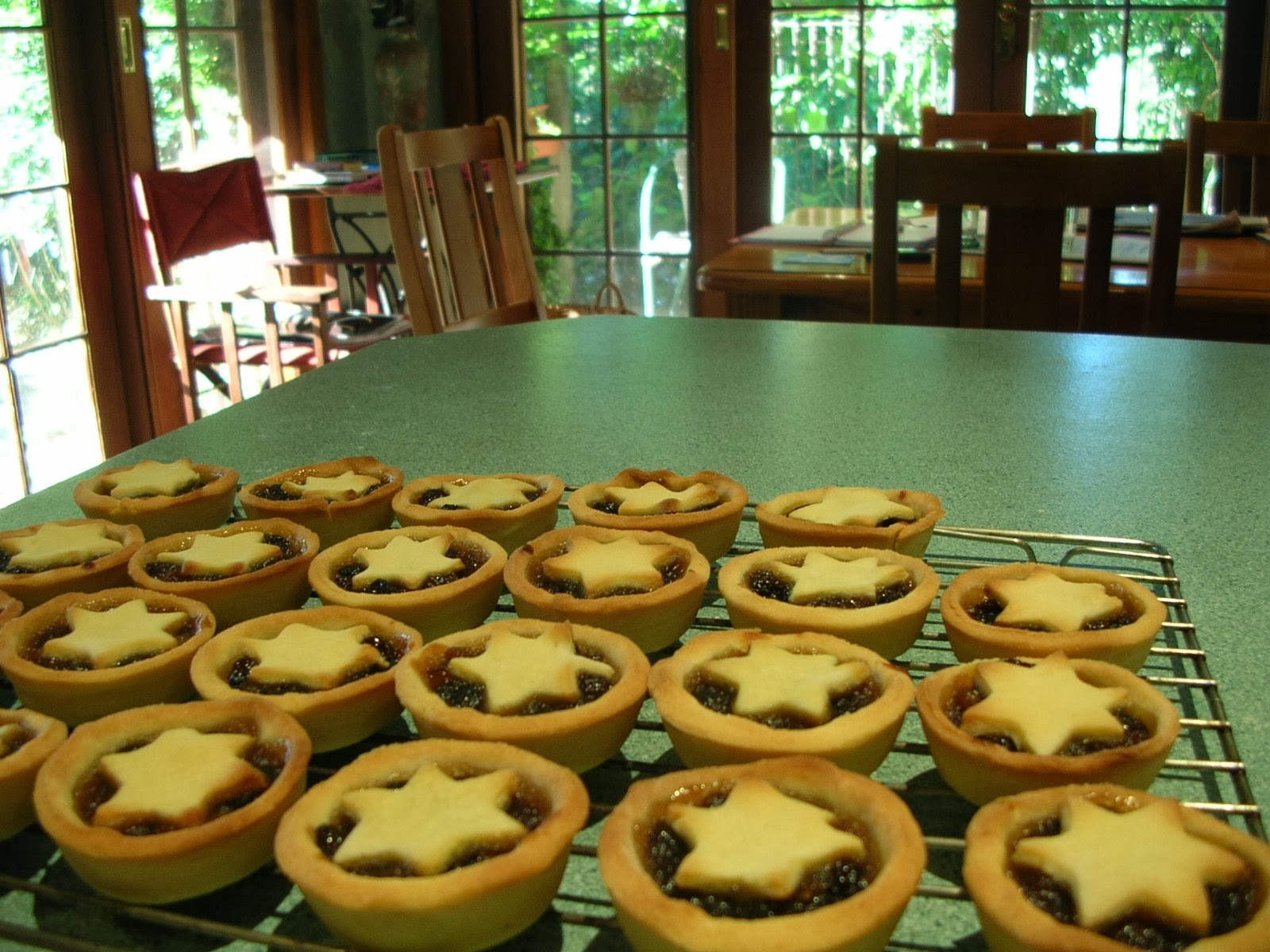
  • listening to singable music while baking - especially at Christmas time, baking mince pies or shortbread while listening to and singing along with classic Christmas carols (A Carnegie Hall Christmas has been my favourite for a long time)

Saturday, August 17, 2013

Where can I go from here?

In the latest round of campaigning for the federal election, opposition leader Tony Abbott has announced that he wants to reduce the number of boats of asylum seekers coming to Australia to a maximum of three boats per year (see article). Apparently there were only 3 boats a year during the last years of John Howard's government (1996-2007), and that's his model.

The proposal is to stop offering residency to people who are recognised as refugees. He reckons he can get it down to that level within the first term of government if his party wins the election this September. That's three years.

But wait, what's a refugee? According to the United Nations Convention Relating to the Status of Refugees (1951 - which Australia is a signatory of), a refugee is: “Any person who owing to a well founded fear of being persecuted for reasons of race, religion, nationality, membership of a particular social group or political opinion, is outside the country of his/her nationality and is unable, or owing to such fear, is unwilling to avail himself/herself of the protection of that country.” (see here for more information).


It seems to me that in all the media hype and politicising of "the boats", we have lost sight of the fact that there are human beings on the boats and they are seeking refuge from something. This is not a holiday cruise for them, but a last-ditch resort to save their lives. It is absolutely no surprise to me that, after assessment of their request for asylum, 90% of asylum seekers arriving by boat are considered to be genuine refugees. Surely, only those who are genuinely in need of getting out of a desperate, life-threatening situation would consider a perilous boat journey (and the other parts of the journey before that) worth the risk.

In many cases, a family can only afford to pay the people smugglers to get one member of the country, so the rest of the family stays behind in the hope that one day they might be able to follow. I often sense that people misinterpret this as a cunning, manipulative plan to get one family member in and then the others will follow. They almost certainly hope they will follow, but the motives are for the preservation of life, not the subversion of an immigration policy.

Perhaps we have too high a view of life in Australia. I love it here just as much as any of us, but I think some people assume that everyone in the world would naturally want to live here and people will make up any story to be able to come and live here. That may be true in some cases (and is probably historically the reason that my husband and I have had to spend a lot of money and time applying for a 'temporary partner visa' for him to be able to stay here). But in other cases, and certainly in the case of people seeking asylum, it is definitely not their preferred choice. Entrusting yourself to a people smuggler is a huge risk, and starting life in a new country with an unfamiliar language and culture is a huge upheaval. Next time you meet someone who is seeking or has been granted refugee status, ask them - if the circumstances in your home country were different, would you rather be there or here?


Maybe there are now more places in turmoil causing more people to flee for their lives than there were during Howard's government. In that case there needs to be attention paid to the reasons for people needing to flee their countries - more diplomatic pressure, perhaps. And maybe the whole industry of people smuggling has grown exponentially since then, particularly because Australia and other countries are not offering resettlement of many people applying offshore for asylum. Whatever the reason for the increase in the number of people coming by 'irregular maritime arrival', if people really need to flee where they live, I'm not convinced that Australian "border protection" policies will stop people smugglers from trying to bring them here while there's money to be made from it.

Monday, June 24, 2013

What's with 'God bless you'?

The other day my husband asked me why people say 'God bless you'. Isn't 'bless' the form you would use for first person ('I bless you') or second person ('you bless me') only? Why isn't it 'God blesses you'? I explained it to him and he suggested I write a blog post about it, in case others wondered the same thing.

It turns out many others have wondered the same thing, as you can see on this Wiki Answers post, this one on English Forums, or this one on English Language and Usage Stack Exchange.

Image from 'Fields of Cake' blog

'(May) God bless you' is a bit like (or belongs to the same paradigm as)

God save the Queen (not saves)
Long live the king (not lives)
Heaven help us (not helps)
God be praised (not is praised)
So be it (not is)
Truth be told (not is told)
If I were you (not was or am)

The fancy technical name for this kind of construction is 'subjunctive mood'. It's a particular form of the verb, although in English it nearly always looks exactly like the 'normal' indicative form. That's why we don't really recognise it when we see it and why it looks or sounds a bit weird if you think about it.

It's different in meaning from the indicative because it expresses a degree of doubt or wishfulness, or something of a hypothetical nature.

Here are the paradigms for indicative and subjunctive, to compare the differences:

Indicative:

I save
you save
he saves
We save
you(se) save
they save

Note that the only one that is different is 'he saves' (third person singular form)

Subjunctive:
I save
You save
He save
We save
You(se) save
They save

Now the verb form is the same across the paradigm, and it's only the third person singular form that is different from the indicative. You can of course read the Wikipedia explanation of subjunctive mood for more information on this. But that's the general gist of it.

Thursday, May 23, 2013

The meaning of murder


Here's a cheery topic for May: Murder - what does it mean? Can you murder something that is not human? A plant, say? I have sometimes thought of myself as a plant-murderer because I'm not much of a green thumb.


What about insects? If so, then I must confess to being a mass-murderer! Spiders (especially huntsmen!), cockroaches, flies, mosquitoes, ants... the list goes on. 

Or what about a goldfish or other kind of aquatic creature? When I was little my family looked after a yabby for my mum's friend who was a primary school teacher. The yabby was a class pet. It was a hot summer. The poor yabby couldn't withstand the heat and when we came home one day we found it had died.

Mammals? I've orchestrated the killing of numerous rats and mice. Maybe the odd possum on the road.

Of course, it's ridiculous to think that murder includes plants and insects. It's possibly less ridiculous to include fish and reptiles, and getting a bit more uncomfortable once we get to mammals. And that's probably because mammals are getting closer to humans in terms of being warm-blooded.

Any dictionary will tell us that murder is when one person kills another person. It has to be unlawful (i.e. not with the permission of someone legally authorised to give that permission, as with capital punishment - and that's a topic for another day). It has to be premeditated, not accidental, otherwise it's considered manslaughter instead.

I was prompted to think about this after the recent disturbing news of the man in Ohio who had kidnapped three young women and held them hostage in his house for a decade. He probably fathered the 6-year-old child found with the women, and the reports talked about accusations of him forcing one of the women to miscarry other pregnancies. The report in the Sydney Morning Herald said this:
As more grim details emerge about the long captivity of the three women rescued from imprisonment in a dilapidated home in Cleveland, prosecutors said they would seek murder charges, potentially carrying the death penalty, against Ariel Castro, accusing him of forcing at least one of the women to miscarry.
Could causing a woman to miscarry constitute murder, according to the basic definition I put forward above? What was killed? An unborn human child. Was it unlawful? Presumably no one gave him authorised permission to do so. Was it pre-meditated? Hard to say, if it's true that he would 'starve Ms Knight for weeks, then repeatedly punch her in the stomach ''until she miscarried''', that would probably be considered pre-meditated.

One interesting factor in all this is the status of the unborn child (or possibly children) miscarried during those terrible years. If the prosecutors want to bring a charge of murder against Castro, they will have to establish that the unborn child should be considered human. I wonder if their case against him will be made difficult by the Abortion Laws in Ohio that allow abortion of foetuses up to 24 weeks (more than half the usual full-term gestation period). Foetuses at 24 weeks (but sometimes earlier) are usually considered 'viable', that is, able to survive outside the womb.

It seems that it's partly also a conflict of wills. In most cases the murderer wants the other person dead, but the person who dies doesn't usually want to die (except in the case of euthanasia - again, a topic for another day). In this case, it was the will of the man who caused the miscarriage and the mother's will was not taken into account - much less the 'will' of the unborn child.

Tuesday, May 7, 2013

Reflections of a language nerd


It's been a while since I formally learnt another language. In fact it was 11 years ago that I studied Latin in my third year of university. Opto, optas, optat, optamus, optatis, optant, and all that.

Now I'm studying Greek - the Greek used in the New Testament - as part of a theological degree. I wasn't sure how I'd go learning Greek, after all I'm 10 years older than I was last time I had to study language and do tests and exams. I've learnt bits of other languages since then (Dutch, Swahili, Luganda) but only piecemeal and through immersion, which is a different kind of learning.

So I've been pleasantly surprised that it's all coming back to me - learning paradigms and vocabulary, and translating sentences that don't always seem to make much sense. Thankfully, many of the grammatical concepts I learnt in Latin (such as noun declensions, noun cases and verb paradigms) carry over into Greek, so I didn't have to start cold as some of my classmates did. Of course, being a linguist doesn't hurt either! Now that we are learning more vocab and more structures, the sentences we have to translate start to be more meaningful and some are even recognisable as particular verses from the Bible.

My understanding of Greek, which is so far limited but growing, is also opening up to me new perspectives on translation of the Bible. I'm very thankful for the hundreds, if not thousands, of years of scholarship on biblical Greek and the careful translation work that has been done over past centuries to give us very good and meaningful translations of the Bible in English as well as many other languages.

The translations we have in English are really very transparent, with any uncertainties or ambiguities footnoted in most versions. So there need be no concern about the reliability of the translation. It is not to be taken for granted that we have the word of God, the Author of Life itself, in a form ordinary people can read and understand for themselves. This is especially so when there are still hundreds of languages around the world that have no translation of the Bible yet. Maybe something I can help with in the future...